Why Energy Storage Is Essential for Renewable Energy Integration
Views: 0 Author: Site Editor Publish Time: 2026-09-30 Origin: Site


Clean power carries a fundamental limitation that developers can no longer ignore. Generation curves rarely align perfectly with peak consumption periods. The sun shines brightest at solar noon, yet power demand spikes at dusk. Wind blows unpredictably, often peaking when grid load hits its absolute lowest point. This inherent mismatch threatens basic grid stability. Consequently, you cannot treat battery infrastructure as an optional add-on. It stands as a mandatory baseline for any commercial deployment today. Without it, developers face severe revenue losses. Grid operators struggle with massive voltage fluctuations. This article delivers a practical, decision-oriented framework. We help you evaluate and procure robust systems properly. You will learn exactly how to ensure strict grid compliance. We also explore ways to guarantee long-term project viability and maximize your financial return.
Key Takeaways
Curtailment Mitigation: Without storage, excess generation is wasted; storage transforms intermittent assets into dispatchable, revenue-generating power.
Technology Matching: The choice between lithium-ion, flow batteries, and mechanical storage depends entirely on discharge duration requirements and specific generation types (e.g., wind vs. solar).
Lifecycle Economics: Evaluation must extend beyond upfront Capex to include Levelized Cost of Storage (LCOS), degradation curves, and warranty enforceability.
Deployment Realities: Permitting, fire safety compliance (e.g., NFPA 855), and EPC integration are the primary bottlenecks in modern storage rollouts.
The Business Case: Solving the Challenge of Intermittent Renewable Energy
Define the core problem. The infamous "duck curve" perfectly illustrates this severe financial risk. When solar production peaks midday, net grid load drops dramatically. As the sun sets, consumer demand skyrockets. This dynamic creates a steep, dangerous ramp-up requirement. Operators must rapidly dispatch power to avoid localized blackouts. Managing intermittent renewable energy without buffers leads directly to operational chaos. You face forced asset shutdowns. Your inverters trip off-line. You ultimately lose substantial revenue.
Cost of curtailment. Without a battery buffer, grid operators mandate generation cuts. This happens frequently during midday overproduction. You literally throw away free electricity. Using energy storage for renewable energy prevents this mandatory shutdown. It captures excess electrons when market prices hover near zero. You then sell this stored power during peak evening hours. This strategy shifts your asset completely. It evolves from a fluctuating liability into a highly profitable, dispatchable resource.
Grid balancing and ancillary services. Battery systems do much more than simply shift energy. They actively monetize frequency regulation and voltage support. Batteries respond to grid frequency signals in milliseconds. They provide peak shaving to reduce heavy industrial demand charges. This flexibility transforms a basic grid compliance requirement into a lucrative revenue center. Effective grid balancing becomes an active profit stream rather than a passive operational duty. Markets increasingly reward fast-responding assets.
Success Criteria. What does successful integration actually look like? You must define clear metrics before procurement begins.
Guaranteed dispatchability to meet peak load demands consistently every evening.
Sub-second response times for immediate frequency regulation and grid stabilization.
Strict adherence to local grid interconnection standards and utility protocols.
Seamless software integration between the battery system and existing generation assets.
Evaluating Solution Categories: Energy Storage for Renewable Energy
Short-to-Medium Duration: Lithium-Ion BESS
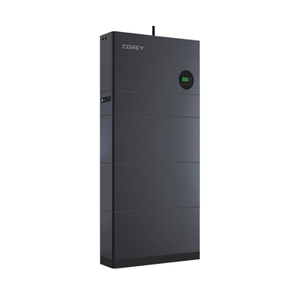
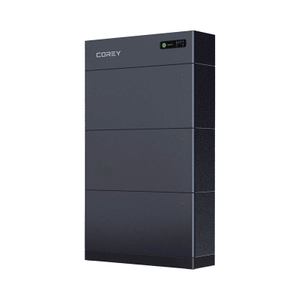
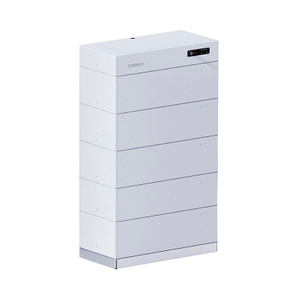
Lithium-ion remains the undisputed dominant force in the current market. It excels specifically in short-to-medium duration applications. Most modern sites utilize Lithium Iron Phosphate (LFP) chemistry over Nickel Manganese Cobalt (NMC). LFP offers superior thermal stability.
Best use cases: It dominates day-to-night energy shifting. You see it heavily utilized for rapid frequency regulation. It serves as the absolute standard choice for solar energy storage. Predictable daily cycling perfectly matches its underlying chemical profile.
Pros:
High energy density saves highly valuable commercial site space.
Rapid deployment timelines significantly accelerate project commissioning schedules.
Highly established global supply chains ensure reliable component availability.
Cons:
Thermal runaway risks demand rigorous, expensive fire suppression systems.
Typical operational lifespan ranges from 10 to 15 years before replacement.
Supply chain volatility occasionally causes unpredictable cell pricing spikes.
Long-Duration Storage (Flow Batteries & Mechanical)
Many utility projects need power for much longer periods. Lithium-ion struggles economically beyond four hours of discharge. Flow batteries and mechanical systems fill this crucial operational gap. Vanadium redox flow batteries separate energy capacity from power output.
Best use cases: Multi-day grid backups require massive energy capacity. Heavy industrial loads demand sustained, steady discharge. They perfectly support highly unpredictable wind energy storage applications. Wind patterns often lull for several consecutive days.
Pros:
Minimal capacity degradation over time ensures multi-decade asset life.
Safer liquid chemistry virtually eliminates explosive thermal runaway risks.
Independent decoupling of power and capacity allows much cheaper scaling.
Cons:
Larger physical footprint drastically complicates early site selection.
Higher initial capital expenditure deters some risk-averse developers.
Fewer established EPC contractors possess this niche installation experience.
Storage Technology Comparison
Technology Type | Ideal Duration | Primary Strengths | Main Limitations |
|---|---|---|---|
Lithium-Ion (LFP) | 2 to 4 hours | High density, fast response time | Thermal risks, 10-15 year lifespan |
Flow Batteries | 8 to 24+ hours | Zero cycle degradation, very safe | Large footprint, higher initial costs |
Mechanical (CAES) | Days to weeks | Massive capacity scaling | Requires specific geological formations |
Critical Evaluation Dimensions for Utility-Scale Battery Storage
Levelized Cost of Storage (LCOS) vs. Upfront Capex
Evaluating utility-scale battery storage strictly on initial price is dangerous. Upfront Capex completely hides the true financial picture. You must calculate the Levelized Cost of Storage (LCOS) instead. This precise metric reveals your actual return on investment. LCOS factors in daily round-trip efficiency losses. It includes ongoing operational expenditures like liquid cooling and preventative maintenance. It also accounts for eventual end-of-life disposal and recycling costs. A remarkably cheap battery often yields a terrible LCOS. High energy losses quickly erase upfront savings. Smart developers strictly prioritize lifecycle economics over sheer purchase price.
Degradation Curves and Warranty Realities
Battery performance degrades inevitably over time. You must carefully analyze all manufacturer performance guarantees. Do not accept vague marketing claims regarding lifespan. Focus strictly on the hard contractual limits. Asset managers must understand two specific wear factors. Calendar fade happens naturally as the battery ages. It occurs regardless of system use. Cycle fade occurs every single time you charge and discharge the cells. Your warranty must clearly cover both degradation types. If a vendor actively obscures their specific degradation curve, walk away immediately. Ensure warranties remain legally enforceable in your specific operating jurisdiction.
Safety, Security, and Compliance
Grid-scale batteries pack enormous amounts of kinetic energy. Operational safety remains paramount. You must demand mandatory industry certifications. UL 9540 ensures overall baseline system safety. UL 9540A provides absolutely critical fire test data. Local fire marshals will categorically reject systems lacking these specific credentials. Physical safety represents only half the battle. Cybersecurity considerations matter just as much today. Foreign hackers increasingly target the Energy Management System (EMS). Inverter control software acts as a highly vulnerable gateway. You must enforce strict network segmentation. Implement zero-trust network architecture for all remote monitoring access points.
Implementation Realities: Rollout Risks and Renewable Energy Integration
Permitting and Interconnection Delays
Deploying heavy hardware is often the easiest part. Navigating local bureaucracy proves much harder. Grid queue backlogs routinely delay major projects by years. You must plan for these structural bottlenecks extremely early. Local Authority Having Jurisdiction (AHJ) approvals represent another major hurdle. Fire marshals closely scrutinize high-density battery sites. Early engagement speeds up your renewable energy integration significantly. Provide them with comprehensive UL 9540A cell-level test reports immediately. Transparency builds trust. It actively prevents last-minute permit denials.
EPC Contractor Selection
Your choice of EPC partner dictates final project success. Standard solar installers often struggle severely when handling complex batteries. You need a contractor possessing specific hybrid site experience. Combining generation and storage requires deep electrical engineering expertise. The contractor must understand highly complex inverter topologies. They must know exactly how to synchronize disparate control systems. Ask potential EPCs about their specific history handling similar utility-scale projects. Demand concrete references for hybrid installations. Do not accept experience based solely on standalone generation sites.
Site Constraints and Thermal Management
Batteries require highly specific physical environments. You must address footprint requirements during the early design phase. Lithium-ion systems need adequate spacing between enclosures. This strict spacing prevents catastrophic fire propagation. Flow batteries simply require massive raw land area. Furthermore, thermal management draws significant parasitic electrical load. HVAC systems must perfectly maintain optimal battery chemistry temperatures. Extreme heat accelerates cell degradation rapidly. Extreme cold severely reduces available discharge capacity. You must explicitly factor HVAC power consumption into your overall system efficiency models. Neglecting this leads to major revenue shortfalls.
Shortlisting Logic and Procurement Next Steps
Needs Assessment: How do you choose the right system? Start by auditing your current generation profile. Determine your exact MW and MWh requirements precisely. A peaking plant needs high MW output for short bursts. A load-shifting solar farm needs high MWh capacity for extended evening discharge. Use advanced predictive modeling to accurately map future grid demands. You must avoid oversizing the system. Excess capacity ruins your financial return model.
RFP Development: Your Request for Proposal (RFP) must be ruthless. Mandate key technical specifications clearly and legally. Specify the exact millisecond response time required. Demand open API access for the battery EMS. Proprietary software locks you into restrictive single-vendor ecosystems. Outline clear, actionable capacity augmentation strategies. As older cells degrade, you must know exactly how to safely add new racks. Ask vendors to detail their specific hardware integration protocols.
Phased Rollout vs. Turnkey Deployment: Assess your internal organizational risk tolerance carefully. Should you pilot a smaller BESS system first? Phased rollouts let you test EMS integration safely. They minimize upfront capital exposure. However, turnkey deployments often secure much better economies of scale. Turnkey approaches also simplify future warranty claims. They provide a single throat to choke when problems arise. Choose the deployment path that accurately matches your internal engineering bandwidth.
Actionable Next Step: Stop guessing at complex system requirements. We recommend engaging an independent engineering firm immediately. Have them conduct a detailed, site-specific feasibility study. Commission a rigorous interconnection analysis. This proactive upfront investment saves millions. It actively prevents expensive design changes later in the construction cycle. Let data drive your procurement strategy.
Conclusion
Successful green power integration remains impossible without highly reliable storage infrastructure. Generation alone simply cannot sustain modern grid stability. The right procurement decision hinges on strict technology matching. You must closely align battery chemistry with your specific generation profile. Rigorously plan for strict fire safety compliance and long-term lifecycle costs. Avoid evaluating projects solely on initial capital expenditure.
Ready to optimize your hybrid power project? We highly encourage stakeholders to take immediate action today. Download our comprehensive technical buyer's guide for utility-scale systems. Request a detailed LCOS calculator to accurately map your true long-term returns. Alternatively, schedule a technical consultation with our engineering team. We will review your site-specific requirements in detail.
FAQ
Q: What is the standard lifespan of utility-scale battery storage?
A: Lithium-ion systems typically last 10 to 15 years before requiring major augmentation or total cell replacement. Their longevity depends heavily on daily cycling frequency, depth of discharge, and environmental temperature control. Conversely, flow batteries experience minimal chemical degradation. They can easily operate efficiently for 20 to 25 years under heavy industrial use.
Q: How does energy storage support grid balancing?
A: Batteries support grids by instantly absorbing excess generation during low-demand periods. They inject this stored power back when demand peaks. Furthermore, smart inverters provide critical ancillary services. They manage rapid frequency response and stabilize local voltage control in milliseconds. This prevents rolling blackouts and maintains continuous power quality.
Q: Is solar energy storage evaluated differently than wind energy storage?
A: Yes. Solar power follows highly predictable daily cycles. This routine makes it ideal for 2-to-4 hour lithium-ion systems designed for daily shifting. Wind generation proves highly variable and unpredictable. It frequently requires long-duration storage solutions. Flow batteries often suit wind projects better because they manage multi-day lulls effectively.
Q: What are the primary fire safety standards for commercial energy storage?
A: NFPA 855 dictates the overarching installation and safety requirements for energy storage systems. Furthermore, UL 9540 certifies baseline system safety. UL 9540A provides the non-negotiable fire test data required by local authorities. These strict standards evaluate thermal runaway risks across the cell, module, unit, and final installation levels.