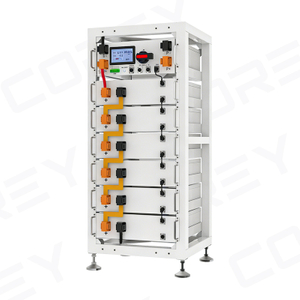
How Battery Energy Storage Supports Telecom Base Stations
Views: 0 Author: Site Editor Publish Time: 2026-09-20 Origin: Site


Network operators face a critical operational junction. They are rapidly transitioning away from reactive standby power models. Instead, they increasingly favor intelligent telecom base station energy storage solutions. This strategic shift helps manage rising operational expenditures (OPEX) and unpredictable grid volatility. The aggressive global 5G rollout acts as the primary catalyst here. Higher power density requirements and the absolute necessity of edge computing completely change the energy landscape. They make legacy lead-acid backups and diesel-only solutions financially and operationally unsustainable.
Why does this matter? Unreliable grids threaten network uptime, while bulky legacy infrastructure consumes valuable physical space. By upgrading power strategies, operators resolve these critical bottlenecks permanently. In this article, you will learn how modern systems bridge grid instability. You will discover how they effectively reduce carbon footprints. We will also explore how to ensure continuous network availability without expanding your physical site footprint.
Key Takeaways
Modern telecom battery solutions have evolved from simple fail-safes into active grid-management assets (peak shaving, load shifting).
Lithium Iron Phosphate (LFP) chemistries currently dominate the evaluation stage due to higher depth of discharge (DoD), reduced footprint, and superior thermal stability compared to traditional VRLA.
Selecting a telecom battery supplier requires evaluating Battery Management System (BMS) interoperability, capacity degradation warranties, and tier-1 manufacturing standards.
Hybrid and off-grid telecom power configurations can reduce diesel reliance by up to 80% when paired with renewable inputs.
The Business Problem: 5G Densification vs. Legacy Infrastructure
The transition to 5G changes everything about site power engineering. The power consumption reality is much harsher today. A typical 5G base station battery setup demands significantly higher instantaneous power delivery than older 4G/LTE configurations. Massive MIMO antennas and localized edge computing servers draw massive loads. This heavy draw severely strains existing site infrastructure. Operators face immense pressure to upgrade their cabinets just to keep the network online during peak traffic.
Next, we must consider grid unreliability and ballooning OPEX. Many regions experience frequent localized grid outages. These interruptions force operators to rely heavily on high-maintenance diesel generators. These legacy generators require constant refueling, filter changes, and mechanical servicing. Furthermore, they produce high emissions. They escalate OPEX and directly threaten corporate sustainability targets. You simply cannot achieve a green network while relying on fossil fuels.
Space and weight constraints add another layer of difficulty to deployment. Urban rooftop sites often lack the structural load capacity for expansive, heavy lead-acid battery banks. You cannot easily reinforce a leased commercial roof. Remote macro cells also struggle with tight physical footprint limitations. Operators need dense, lightweight energy solutions that fit into standard 19-inch telecom racks without requiring costly structural modifications.
Strategic Capabilities of a Telecom Energy Storage System
Modern networks require active, intelligent energy management. A robust telecom energy storage system transforms a static tower site into a dynamic grid asset.
First, we look at mission-critical reliability. You must provide seamless telecom backup power during unexpected outages. Advanced systems deliver zero-millisecond transfer times. This incredible speed prevents dropped calls and eliminates critical data packet loss during grid failures. Your commercial and consumer customers demand 100% availability. A modern storage architecture ensures you meet those strict Service Level Agreements (SLAs).
Second, these systems excel at peak shaving and TOU (Time-of-Use) optimization. Smart controllers discharge stored energy during expensive peak grid pricing hours. They then recharge the battery bank during cheap off-peak windows. This simple, automated cycle dramatically lowers monthly utility costs. It turns passive standby batteries into active money-saving tools.
Finally, they enable comprehensive green network deployments. Storing intermittent renewable energy, like localized solar or wind, stabilizes overall power delivery. This capability is absolutely essential for establishing reliable off-grid telecom power sites. By buffering variable solar inputs, the battery ensures a smooth, constant 48V DC supply to the sensitive radio equipment.
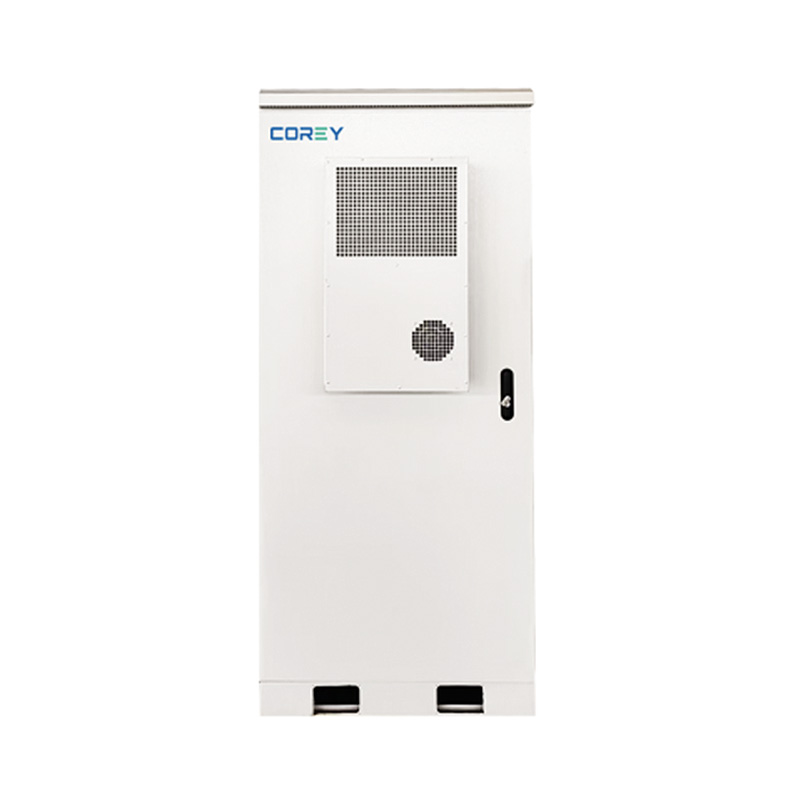
Evaluation Dimensions: Selecting the Right Battery Chemistry
Choosing the correct battery chemistry dictates long-term performance and profitability. We often compare Lithium Iron Phosphate (LFP) against traditional Valve-Regulated Lead-Acid (VRLA).
You must conduct a rigorous cost-benefit analysis based on long-term lifecycle value rather than merely looking at upfront CapEx. LFP batteries demand a higher initial investment. However, they drastically cut replacement costs, reduce site visits, and minimize manual maintenance labor over a ten-year operational span. This makes them significantly more economical over time.
Let us closely examine cycle life and Depth of Discharge (DoD). Network engineers must meticulously assess warranties for cycle degradation. LFP typically offers 3,000 to 6,000 cycles at 80% DoD. This robust performance vastly outperforms VRLA, which degrades rapidly under frequent deep cycling. If a grid is highly unstable, VRLA banks often fail within two years.
Thermal management is equally crucial. We must evaluate safe operating temperature ranges. Many remote telecom sites lack active HVAC systems due to power constraints. Batteries must endure extreme heat and cold without accelerated capacity fade. LFP maintains superior thermal stability here. It operates safely at much higher temperatures than lead-acid equivalents.
Lastly, we measure volumetric energy density. You need to maximize available kWh per square meter within restricted base station cabinets. LFP provides exceptional density. It allows you to double your backup runtime in the exact same physical cabinet space.
Table 1: Battery Chemistry Comparison for Telecom Sites
Evaluation Metric | Lithium Iron Phosphate (LFP) | Valve-Regulated Lead-Acid (VRLA) |
|---|---|---|
Cycle Life (at 80% DoD) | 3,000 – 6,000 cycles | 300 – 500 cycles |
Volumetric Energy Density | High (Requires minimal cabinet space) | Low (Requires expansive racking) |
Thermal Tolerance | Excellent (Operates up to 55°C safely) | Poor (Degrades rapidly above 25°C) |
Routine Maintenance | Zero manual maintenance required | Requires periodic terminal checks |
Architecting Scalable and Off-Grid Telecom Power
Network traffic never stops growing. Your site power architecture must grow alongside it smoothly. Modular scaling is an absolute necessity today. You need parallel-capable battery modules. These smart modules allow network engineers to scale capacity incrementally. You simply slide new modules into the rack as site traffic and power demands increase over the years.
Hybrid system integration provides another massive operational advantage. You need proven architectural frameworks for integrating multiple power sources efficiently. Diesel generators, solar arrays, and energy storage must blend into a unified, smart microgrid. This integration proves vital for remote, off-grid locations where logistics are challenging.
Interoperability ties the entire site together. You must ensure your storage architecture natively communicates with existing rectifiers. It must also integrate seamlessly with legacy site power controllers. Without deep interoperability, your system remains fragmented and prone to alarm failures.
Here are several best practices when architecting your power system:
Audit existing site loads meticulously to establish accurate baseline power draws before sizing batteries.
Size the battery bank to handle at least 24 hours of autonomous operation for off-grid scenarios.
Configure the site rectifier parameters precisely to match lithium constant-current/constant-voltage (CC/CV) charging profiles.
Implement a unified site controller to manage priority switching between solar, battery, and generator inputs.
Implementation Realities and Deployment Risks
Deploying new energy infrastructure carries specific operational risks. We must address them directly to ensure total network stability.
BMS network integration plays a uniquely critical role. The Battery Management System acts as the intelligent brain of your setup. It provides essential remote telemetry. Engineers need real-time data on State of Charge (SoC), State of Health (SoH), and internal cell temperatures. The BMS must transmit this vital data via standard telecom protocols like SNMP or Modbus TCP directly to the Network Operations Center (NOC).
Thermal runaway and safety compliance represent major global hurdles. You must navigate strict international fire safety standards, such as UL 9540A. Ensure the system includes granular, cell-level temperature monitoring. Integrated aerosol fire suppression mechanisms are also becoming non-negotiable for site safety, especially in dense urban environments.
Theft and vandalism mitigation require highly proactive measures. Uncrewed sites are vulnerable targets. Implement software-locked BMS controls. If someone removes the battery from the authorized site, the BMS permanently locks the discharge ports, rendering the unit useless. You should also integrate discrete GPS tracking modules.
Common deployment mistakes to avoid include:
Failing to update legacy rectifier voltage settings, which leads to chronic undercharging of lithium modules.
Ignoring the ambient temperature extremes of a site, causing premature BMS shutdowns.
Overlooking the weight limits of existing cabinet rails when sliding in high-density storage modules.
Shortlisting Your Telecom Battery Supplier
Not all manufacturers deliver identical industrial quality. Finding a reliable telecom battery supplier demands rigorous, structured vetting.
Start by deeply assessing their manufacturing pedigree. Evaluate their global supply chain resilience and internal R&D capabilities. Examine their direct manufacturing capacity carefully. Top-tier global OEMs frequently categorize these highly specialized solutions under standard industry terms like 通信基站储能. You want a partner who actually builds the cells, not just an assembler who buys parts on the open market.
Look beyond glossy marketing sheets. You must evaluate solid, legally binding Performance Guarantees. Scrutinize their Service Level Agreements (SLAs). Demand measurable capacity retention guarantees covering a full 10-year lifespan. Ensure they maintain a strong, responsive local support infrastructure in your deployment regions.
Finally, insist on comprehensive compliance documentation. Demand verifiable, third-party testing data. You need solid proof of reliable extreme weather operation. Electromagnetic compatibility (EMC) certification is also incredibly vital. Batteries operate millimeters away from highly sensitive radio equipment; they cannot emit interference.
Conclusion
Relying on legacy power models poses an unacceptable risk today. It threatens both network uptime and long-term profitability in the highly demanding 5G era. Intelligent energy storage acts as a critical, dynamic buffer. It protects operations against inevitable grid failure while maximizing the value of renewable energy inputs.
Procurement and engineering teams must take immediate action. First, conduct comprehensive site-level load audits to understand your true power requirements. Second, evaluate potential chemistry upgrades based on strict space and thermal constraints. Finally, initiate focused proof-of-concept (PoC) testing using scalable lithium-based systems. These methodical steps ensure a seamless, reliable transition to modern telecom power.
FAQ
Q: What is the standard lifespan of a 5G base station battery?
A: A modern LFP battery typically lasts 10 to 15 years under proper management. We measure lifespan primarily in cycle life rather than calendar years. High-quality lithium cells offer 3,000 to 6,000 cycles. An intelligent Battery Management System (BMS) extends this lifespan by preventing deep discharging and monitoring cell temperatures.
Q: Can existing telecom backup power systems be upgraded with lithium batteries?
A: Yes, but they are rarely simple "drop-in replacements." You must verify voltage compatibility with your current 48V DC bus. Furthermore, engineers must adjust the site rectifier settings to match lithium charging profiles. The site controller also needs software updates to communicate correctly with the new BMS.
Q: How does energy storage reduce diesel generator runtime in off-grid sites?
A: The system cycles the battery to handle the primary, continuous site load. The diesel generator remains off most of the time. The generator only activates to perform efficient bulk charging when the battery depletes. This method slashes fuel consumption, extends generator maintenance intervals, and significantly reduces carbon emissions.